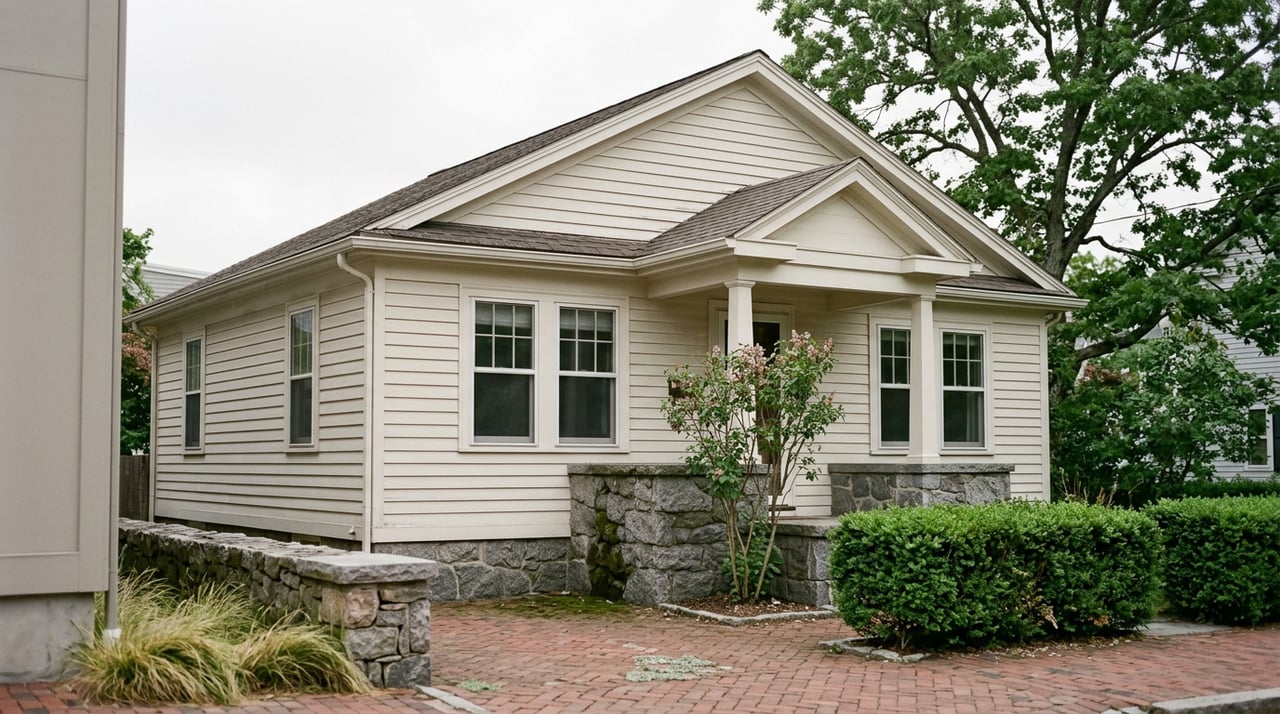
Nevada City's Home Prices Depend on Which Nevada City You Mean
August 13, 2026
August 13, 2026
Pull up four real estate sites and search the same town on the same afternoon, and you'll get four different answers. As of mid-2026, Redfin puts Nevada City's three-month median sale price at $796,000. Zillow's home value estimate sits at $568,818. Houzeo reports a median of $899,000. Movoto lists the median asking price at $699,000. None of these sites made an error. They're each measuring something slightly different, in a market small enough that the differences matter more than they would almost anywhere else.
That's the actual story here, and it's more useful to a buyer or seller than any single number could be. Nevada City doesn't have one housing market. It has two, wearing the same zip code, and the statistics that get built on top of them wobble accordingly.
Here's what each site is actually counting, and when.
| Source | What it measures | Figure | Time window |
|---|---|---|---|
| Redfin | Median sale price, 3-month rolling | $796,000 | March–May 2026 |
| Redfin | Average sale price, single month | $885,000 | May 2026 |
| Movoto | Median list price (active listings) | $699,000 | July 2026 |
| Zillow | Average estimated value, all homes | $568,818 | As of June 30, 2026 |
| Houzeo | Median sale price | $899,000 | March 2026 |
Notice that these aren't even the same kind of number. Some are medians, some are averages. Some track homes that sold, others track homes currently listed. Zillow's figure isn't built from recent transactions at all. It's a modeled estimate across the entire housing stock, including homes that haven't changed hands in years, which pulls it toward the town's older, smaller housing inventory rather than what's actively trading. Compare that to a sale-price median built from three months of closings, and a $300,000 gap stops being strange. It's arithmetic doing exactly what arithmetic does when you feed it different inputs.
The bigger reason these numbers move around so much is that Nevada City simply doesn't sell very many homes. Redfin's own count shows 10 homes sold in May 2026, down from 13 in May 2025. Houzeo's data shows only 3 homes sold in March 2026, out of just 13 active listings that month.
That's not a market you run statistics on the way you'd run them on Sacramento or even Grass Valley. When your monthly sample size is in the single digits, one custom-built home on a ridge or one modest fixer near downtown can shift the reported median by tens of thousands of dollars, purely because it happened to close in that window. A town selling three homes in a month doesn't have a "market price" in the way a town selling three hundred does. It has three data points, and whichever one is priciest gets to represent the whole month until the mix changes again.
This is the same problem anyone trained to read small-sample data recognizes immediately, the kind of instinct Sarah Stone-Francisco brings from her background in epidemiology and biostatistics: a rate built on a handful of cases needs to be read as a range, not a verdict. Nevada City's price data behaves less like a stable trend line and more like a coin flip that happens to land on a number every 30 days.
The other reason a single median doesn't hold up here is that "a Nevada City home" describes two genuinely different products.
Nevada City's downtown core has been listed on the National Register of Historic Places since September 1985, and it's protected locally under what the city still refers to as Ordinance 338, the original Historical District Ordinance. Inside that boundary, exterior work on a contributing building doesn't move through a normal permit counter. It moves through one of two tracks:
On top of that, Nevada City contracts with Nevada County for building department services, so a historic-district renovation typically clears the city's planning desk first, then moves to the county building department for the actual permit. A buyer taking on a Gold Rush-era Victorian inside the district is signing up for a review process that a buyer of a newer home outside the district line will simply never encounter.
That difference shows up in price, in renovation timelines, and in how comparable two "similar" listings actually are. Blend a restored, review-governed Victorian with a 1990s build on the edge of town into one town-wide median, and you get a number that describes neither property particularly well. It's less that the market is confusing and more that we're averaging two different things and calling it one.
Despite the noisy statistics, demand hasn't disappeared. Redfin's migration data for the first quarter of 2026 shows that among people searching for homes in Nevada City, 74% were already looking to stay within the surrounding metro area, while 26% were searching to leave it. On the inbound side, San Francisco sent more home searchers into Nevada City than any other outside metro, followed by Los Angeles and Washington. When Nevada City buyers did look elsewhere, Reno was their most common destination, followed by Fresno and Chico.
That inbound interest from larger, pricier metros helps explain why sellers have still been able to command strong terms even as headline "average" figures look soft. Houzeo's data shows a sale-to-list ratio of 105.78% in March 2026, with 66.67% of homes selling above asking price, up sharply from 25% a year earlier.
One current wrinkle worth watching if you're weighing a purchase with rental income in mind: a short-term rental measure has been an active subject of debate in Nevada City's local opinion pages this year. The details of that measure matter more to lifestyle-property and investment buyers than to primary-residence purchasers, but it's a live local variable, not a settled one, and worth asking a local agent about directly rather than assuming last year's rules still apply.
None of this means the published numbers are useless. It means they need to be read as a range built from a small, mixed sample rather than a single verdict. A few practical habits help:
Ask which pool a number is drawn from. A median built from closed sales over a rolling three-month window tells you something different than a median built from today's active asking prices.
Ask whether the comp set separates historic-district properties from everything else. A restored Victorian inside the review boundary and a newer home outside it are not the same asset, even at the same price point.
Watch sale-to-list ratio and days on market together, not price alone. A property selling at 105% of asking after a week on the market is telling you something about competition that a raw median never will.
Why does Zillow's estimate look lower than everyone else's? Because it's an average across the entire existing housing stock, not a median built from recent sales. It reflects the town's overall inventory, including older and smaller homes that rarely change hands, which pulls the figure down relative to transaction-based medians.
Does a historic-district address always cost more? Not automatically. It usually means a slower, more structured path for any exterior renovation, which some buyers value and others would rather avoid. That difference in process, more than the address itself, is what separates the two segments of this market.
Should I wait for the market to "settle" before deciding? Given how few homes trade here each month, there may not be a settled number to wait for. A buyer or seller is generally better served by understanding the specific comparable set for their property type than by waiting for a town-wide average to stabilize.
If you're trying to make sense of a specific Nevada City listing, or you're weighing whether a historic-district property fits what you actually want to take on, Stone Luxury Homes can walk through the actual comps behind the headline number with you. Let's Connect.

Enjoy attentive service, thoughtful guidance, and a detail-oriented approach designed to help you achieve your real estate goals.